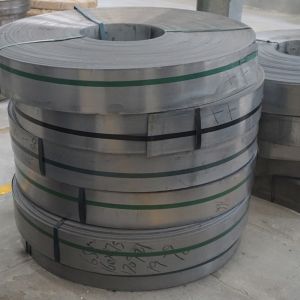
Overview:
Low carbon steel strip, also known as soft steel, has a carbon
content ranging from 0.10% to 0.30%. The use involves metal hose
belts, flange packing belts, saw blade steel belts, blade steel
belts, spring washers, bicycle steel belts, stationery steel belts,
hair clips steel belts, electrical fasteners steel belts, armored
cables steel belts, heat dissipation fins steel belts, prestressed
corrugated pipes steel belts, clocks and watches steel belts, etc.
Low carbon steel is generally rolled into angle steel, channel
steel, I-beam, steel pipe, steel strip, and steel plate, and is
used to make various building components, containers, boxes,
furnaces, and agricultural machinery. High quality low-carbon steel
is rolled into thin sheets to produce deep drawn products such as
car cabins and engine hood; It is also rolled into bars and used to
make mechanical parts that do not require high strength. Low carbon
steel generally does not undergo heat treatment before use. Parts
with carbon content above 0.15% are carburized or cyanide treated,
and are used for shafts, bushings, sprockets, and other parts that
require high surface roughness and good wear resistance. Low carbon
steel is limited in use due to its low strength. Properly
increasing the manganese content in carbon steel and adding trace
alloying elements such as vanadium, titanium, and niobium can
greatly improve the strength of the steel. If the carbon content in
steel is reduced and a small amount of aluminum, boron, and carbide
forming elements are added, an ultra-low carbon bainite composition
can be obtained, which has high strength and maintains good
plasticity and toughness.