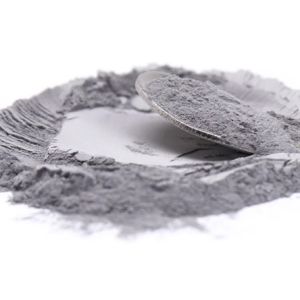
1. Overview and Introduction
Al6061 is one of the most versatile and widely used wrought
aluminum alloys in traditional manufacturing (e.g., extrusion,
forging, CNC machining). However, its use in powder-based additive
manufacturing (AM), particularly Laser Powder Bed Fusion (LPBF), is
significantly more challenging and less common than casting alloys like AlSi10Mg or AlSi7Mg.
"High-Quality" Al6061 powder is engineered to overcome these challenges, aiming to replicate
the excellent combination of strength, weldability, and corrosion
resistance that makes the wrought form so popular. Successfully
printing with Al6061 requires precise control of powder
characteristics and advanced printing parameters.
2. Chemical Composition (Typical Weight %)
The composition is key to its properties and aligns with standards
like ASTM B928 or AMS 4417.
| Element | Content (%) | Role and Effect |
|---|
| Aluminum (Al) | Balance | Base metal. |
| Magnesium (Mg) | 0.8 - 1.2% | Primary strengthening element via solid solution strengthening and
formation of Mg₂Si precipitates. |
| Silicon (Si) | 0.4 - 0.8% | Works with Magnesium to form the strengthening phase Mg₂Si. |
| Iron (Fe) | ≤ 0.7% | Impurity, controlled to prevent brittleness. |
| Copper (Cu) | 0.15 - 0.40% | Enhances strength through precipitation hardening but can slightly
reduce corrosion resistance. |
| Chromium (Cr) | 0.04 - 0.35% | Acts as a grain refiner; controls recrystallization and improves
toughness. |
| Manganese (Mn) | ≤ 0.15% | Impurity control. |
| Other Impurities | ≤ 0.05% each | Strictly controlled. |
3. Key Characteristics and Properties
- Excellent Strength-to-Weight Ratio: A hallmark of the 6xxx series.
- Good Corrosion Resistance: Particularly against atmospheric conditions, better than many 2xxx
or 7xxx series alloys.
- High Toughness and Ductility: In its fully heat-treated state, it offers good elongation, making
it suitable for structural applications.
- Excellent Weldability: In its wrought form, it is highly weldable. This translates to
good potential for repair or hybrid manufacturing with AM.
- Challenge of Hot Cracking: This is the primary obstacle in LPBF. The solidification range of Al6061 is wide, making it
highly susceptible to solidification cracking (hot tearing) during
the rapid cooling of the melt pool.
4. Powder Characteristics (The "High-Quality" Differentiator)
For Al6061 to have any chance of successful printing, powder
quality is paramount:
- Particle Size Distribution (PSD): Tightly controlled, typically 15 - 45 µm or 20 - 63 µm. A narrow distribution improves flowability and packing density.
- Morphology: Near-perfect sphericity is non-negotiable. Any satellite particles or irregularities will
severely hinder flow and cause defects.
- Flowability: Must be excellent (e.g., Hall Flow < 30 s/50g). Poor flow will
result in uneven layers and high porosity.
- Low Moisture and Oxide Content: This is critical. The powder must be produced, stored, and handled
under an inert atmosphere (Argon) to minimize surface oxides, which
can exacerbate cracking and create inclusions.
- Chemical Purity: High-quality powder will have tight control over trace elements
that can worsen hot cracking.
5. Microstructure and The Cracking Challenge
The Fundamental Problem: Unlike the near-eutectic AlSi10Mg, Al6061 solidifies over a wide
temperature range. This leads to the formation of a long,
vulnerable mushy zone where liquid films between dendrites are torn
apart by thermal stresses, causing solidification cracks that
render a part useless.
Strategies for Successful Printing:
- Process Parameter Optimization: Using very high-powered lasers and specific scan strategies to
create a stable melt pool and manage thermal gradients.
- Nanoparticle Seeding (An Advanced Approach): The most successful research and industrial methods involve doping
the Al6061 powder with specially engineered nanoparticles (e.g.,
Zirconium (Zr), Scandium (Sc), or Titanium Carbide (TiC)). These
particles act as nucleation sites for fine, equiaxed grains,
effectively "patching" the vulnerable grain boundaries and
preventing crack propagation. This creates a new class of materials
often called "crack-free" 6xxx series alloys (e.g., variations like A6061-RAM or Scalmalloy® for 7xxx series).
6. Heat Treatment (Precipitation Hardening)
Al6061 responds well to the standard T6 heat treatment, which is
essential for achieving its full mechanical potential.
- Solution Heat Treatment: ~530°C for a sufficient time to dissolve alloying elements into
the matrix.
- Quenching: Rapid cooling, typically in water.
- Artificial Aging: ~160-175°C for 8-18 hours to precipitate fine Mg₂Si particles,
significantly increasing strength.
7. Applications
Due to the challenges, applications for LPBF-produced Al6061 are
more niche but target components that traditionally use wrought
6061:
- Aerospace Prototypes & Tooling: Jigs, fixtures, and functional prototypes that need to match the
properties of final wrought parts.
- Automotive: Custom brackets and lightweight structural components where
ductility is valued.
- Hybrid Manufacturing: Used in Directed Energy Deposition (DED) processes for repairing
or adding features to existing 6061 components.
8. Advantages and Limitations
Advantages (When Successfully Printed & Treated):
- Familiarity: Well-understood material properties for engineers.
- Excellent Combination of Properties: Good strength, high ductility, and great corrosion resistance.
- Weldability: Suitable for post-processing and integration with other
components.
Limitations:
- Extremely Difficult to Process with LPBF: High susceptibility to hot cracking makes it unreliable for
complex geometries without advanced parameter sets or material
modifications.
- Lower As-Printed Density: It is very challenging to achieve the >99.5% density typical of
AlSi10Mg.
- Requires Specialized Expertise: Not a "plug-and-play" material; requires significant R&D and
process optimization.
- Cost: High-quality powder and the need for extensive parameter
development increase the overall cost.
9. Comparison with Common AM Alloys
| Feature | Al6061 (for AM) | AlSi10Mg (AM Benchmark) | AlSi7Mg (AM Alternative) |
|---|
| Primary Alloying | Mg & Si | Si | Si & Mg |
| Printability | Very Difficult | Excellent | Very Good |
| Key Strength | Ductility & Toughness | Printability & Strength | Strength-Ductility Balance |
| Typical Use | Niche, high-toughness parts | General purpose, fixtures, housings | Structural, dynamic loads |
| Status | Advanced/Developmental | Mature/Industrial Workhorse | Mature/High-Performance |