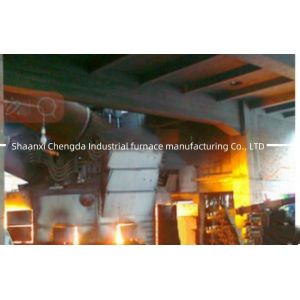
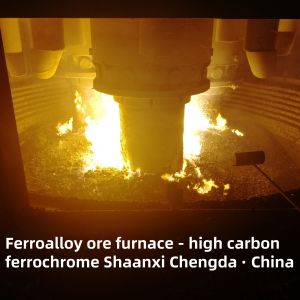
Vanadium Iron Electric Arc Furnace is a specialized smelting equipment tailored for the production of vanadium iron alloy—a critical
additive used to enhance the strength, toughness, and corrosion
resistance of steel (e.g., high-strength construction steel,
automotive steel, and special alloy steel). Unlike general-purpose
electric arc furnaces, it is optimized for the unique physical and
chemical properties of vanadium-containing raw materials (such as
vanadium slag, vanadium pentoxide, or vanadium-bearing scrap) and
the technical requirements of vanadium-iron alloy formation,
integrating precise temperature control, reducing atmosphere
regulation, and efficient component adjustment.
Vanadium iron smelting requires strict control over reduction
reactions (to convert vanadium oxides into metallic vanadium) and
alloy composition (to ensure vanadium content meets industry
standards, typically 35%–80% V). The furnace’s design therefore
emphasizes the following key features:
Targeted Raw Material Adaptability:
Specifically optimized for smelting vanadium-rich raw materials
(e.g., vanadium slag from steelmaking, V₂O₅, or vanadium-bearing
pig iron). Its feeding system and furnace lining (often made of
high-alumina or magnesia refractory materials) resist corrosion
from vanadium oxides and high-temperature molten slag, ensuring
long-term stable operation.
Precise Thermodynamic Control:
Adopts advanced temperature monitoring (e.g., infrared
thermometers, thermocouples) and electrode adjustment systems
(hydraulic or servo-driven). Vanadium iron smelting requires a
narrow temperature window (1,600–1,800°C) to avoid excessive
oxidation of vanadium or incomplete reduction; the furnace
precisely maintains this range to maximize vanadium recovery rate
(usually over 90%).
Reduction Atmosphere Regulation:
Equipped with sealed furnace body and inert gas (e.g., nitrogen,
argon) injection systems. By isolating air or filling with reducing
gases, it prevents reoxidation of vanadium during smelting— a
critical issue that would reduce alloy quality and vanadium yield.
Efficient Slag-Metal Separation:
Features a tilted furnace body (with adjustable tilting angle) and
optimized slag discharge structure. Vanadium smelting produces
high-viscosity slag; the design ensures complete separation of
molten vanadium iron and slag, reducing vanadium loss in slag and
improving product purity.
Automated Process Management:
Integrated with PLC (Programmable Logic Controller) and SCADA
(Supervisory Control and Data Acquisition) systems. It automates
key processes such as electrode lifting, temperature control,
feeding, and slag discharge, while real-time monitoring of vanadium
content (via on-line spectral analysis) ensures consistent alloy
quality.
The furnace relies on DC or AC arc discharge to generate high
temperatures, driving the smelting and reduction of
vanadium-containing raw materials. The core process includes three
stages:
- Melting Stage: The arc (generated between electrodes and raw materials) heats
the charge to 1,500–1,600°C, melting vanadium slag, iron ore, and
other raw materials into a uniform molten mixture.
- Reduction Stage: Reducing agents (e.g., carbon, ferrosilicon) are added to the
molten bath. Under high temperature, vanadium oxides (e.g., V₂O₅,
V₂O₃) react with reducing agents to form metallic vanadium, which
dissolves in molten iron to form vanadium iron alloy.
- Refining & Separation Stage: The furnace is tilted to discharge low-vanadium slag first; then,
the molten vanadium iron (with controlled vanadium content) is
tapped into ladles for subsequent processing (e.g., casting into
ingots or granulation).
Vanadium Iron Electric Arc Furnace is the core equipment for
vanadium iron alloy production, and its products are widely used
in:
- Steel Industry: Production of high-strength low-alloy (HSLA) steel, pipeline
steel, automotive sheet steel, and tool steel (vanadium iron
improves steel’s strength and weldability).
- Special Alloy Field: Manufacturing of superalloys for aerospace engines, nuclear power
equipment, and high-temperature-resistant components (vanadium
enhances alloy’s heat resistance and creep resistance).
- Metallurgical Auxiliary: Production of vanadium-based additives for adjusting the
composition of other ferroalloys (e.g., vanadium-molybdenum alloy,
vanadium-titanium alloy).
- High Vanadium Recovery Rate: Targeted design for vanadium reduction and separation, with
vanadium recovery typically exceeding 90%—far higher than
general-purpose furnaces (which often have <80% recovery).
- Stable Product Quality: Precise control of temperature, atmosphere, and composition
ensures vanadium content in the final alloy meets international
standards (e.g., GB/T 4139-2021 in China, ASTM A1005 in the US)
with low impurity content (S, P <0.05%).
- Energy Efficiency: Optimized arc stability and heat utilization reduce unit energy
consumption—tonnage vanadium iron (60% V) consumes approximately
4,500–5,500 kWh of electricity, 10%–15% lower than traditional
blast furnace processes.
- Environmental Friendliness: Equipped with waste gas treatment systems (e.g., bag filters,
desulfurization devices) and waste heat recovery units, reducing
emissions of dust, SO₂, and NOₓ. It also avoids the heavy pollution
of coke-based smelting processes.
In summary, Vanadium Iron Electric Arc Furnace is a specialized,
high-efficiency equipment that supports the industrial chain of
vanadium-based materials. Its technical optimization for vanadium
smelting ensures stable, high-quality, and environmentally friendly
production of vanadium iron alloy, playing a key role in advancing
the high-end steel and special alloy industries.