Applicable Areas
- Piped direct - drinking water is not only a new trend in urban life
but also a pursuit of high - quality and healthy drinking water. In
an increasing number of places such as communities, shopping malls,
airports, railway stations, hotels, and schools, people can access
healthy and fresh water, which enhances the drinking water
experience and ensures drinking water safety.
| Residential Communities: As people's demand for drinking water quality increases, some
high - end residential communities have introduced direct -
drinking water projects. This not only provides users with high -
quality drinking water at a reasonable price but also further
improves the community's supporting facilities. Using direct -
drinking water equipment can effectively address issues such as
high hardness, unpleasant odors, and yellowish water quality in tap
water. The high - end filters installed in the direct - drinking
water equipment can remove harmful substances from water, ensuring
the safety of users' drinking water. |  |
| Commercial Offices: The common drinking water mode in commercial office buildings is
bottled water with water dispensers. This way of drinking water
requires regular replacement of bottled water, which is time -
consuming, labor - intensive, and costly. Direct - drinking water
equipment can customize the water supply according to the number of
employees in the unit. While meeting the drinking water needs of
office workers, it also enables fashionable and healthy drinking
water. | 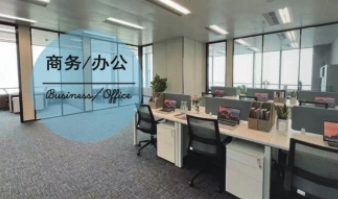 |
| Hotels and Guesthouses: With the continuous development of society, there are more and
more people on business trips, traveling, and dining out. When
travelers can have a sip of healthy and fresh drinking water
outside, it will surely enhance guests' satisfaction. This not only
saves costs and is environmentally sustainable but also enhances
the brand image. | 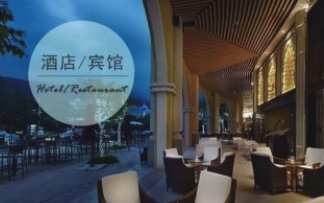 |
| Schools and hospitals have a large number of visitors and high
water consumption, with concentrated peak - drinking periods and
long water - supply durations. Direct - drinking water equipment
can ensure sufficient water production, long - term water supply,
healthy water quality, and hygienic safety, meeting the water - use
standards of schools and hospitals. It has a low water - fetching
cost and flexible water - fetching methods, which can reduce the
waiting time for getting water. |  |
Product Features
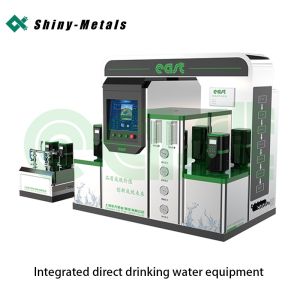
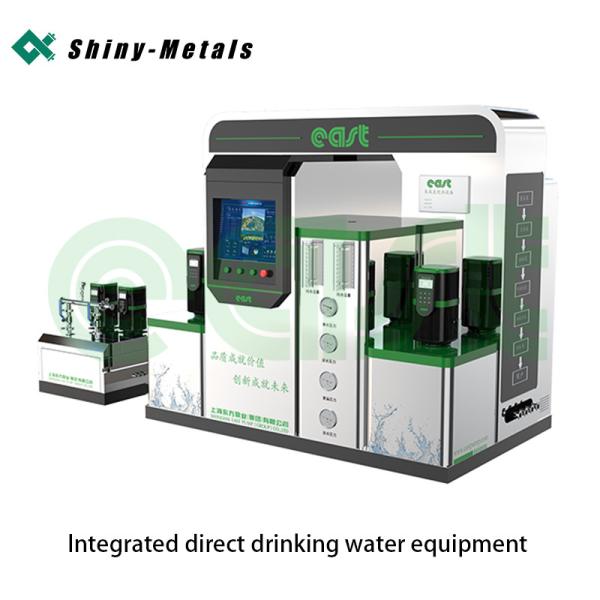
The DSW integrated direct - drinking water equipment features an
integrated product design with a compact and reasonable structure,
occupying a small footprint. It can combine different modules
according to the quality of tap water to achieve modular
production.
- Separate - quality water supply: It completely separates drinking water from domestic water, and
the waste water can be recycled, thus saving water resources.
- Customized solutions: Based on the actual situation of the project, it designs,
selects, and custom - makes the most suitable equipment and
pipeline system.
- Nanofiltration membrane filtration: It uses membrane separation technology to safely and efficiently
remove bacteria and viruses while retaining beneficial trace
elements and minerals.
- Quality assurance: Key components are from imported brands, and the flow - through
parts are made of sanitary - grade stainless - steel pipes and
valves.
- Long lifespan: With a mature water - making process, it ensures long - term
stable operation and has a low operating cost.
- Automatic back - flushing: This extends the service life of the filter elements.
- Unattended operation: PLC automatic control is adopted to monitor water quality, water
volume, and faults at any time. No dedicated personnel are required
for monitoring, making drinking water safer and more reassuring.


Ultrafiltration can intercept large - molecule harmful substances
such as bacteria and viruses, but it cannot remove substances like
heavy metals, so the water cannot be drunk directly. Reverse
osmosis has a filtration pore size of 0.1 nanometers, with a
removal rate of substances in water of over 99%. The water produced
contains no minerals and is not suitable for long - term
consumption. Nanofiltration, with a filtration pore size of 1
nanometer, can intercept all harmful substances including heavy
metals, bacteria, and viruses, while retaining the minerals and
trace elements in the original water. The water quality of the
effluent is suitable for long - term drinking.
Multi - stage Precision Filtration and Purification System
Pure, Fresh, Healthy, Sweet
01 - Multi - medium Filtration System
Removes sediment, rust, colloids, and suspended solids.
02 - Activated Carbon Filtration System
Removes color, organic pollutants, heavy metal ions, and reduces
residual chlorine.
03 - Water Softening Filtration System
Reduces water hardness, removes calcium and magnesium ions in
water, and effectively prevents scaling.
04 - Prefiltration System
Further filters out impurities and fine particles to prevent
particles from damaging the membrane.
05 - Ultrafiltration System
Further reduces turbidity, filters out bacteria and viruses, and
further purifies the water quality.
06 - Nanofiltration Membrane System
It is the core component of the direct - drinking water production
process, effectively removing microorganisms, heavy metals,
polyvalent salts, and organic pollutants in water. The water
quality of the effluent is close to pure water, and some trace
elements can be retained. The treated water can be directly
consumed, which is the first - choice for international direct -
drinking water treatment processes.
07 - Ozone Sterilization System
Reduces the secondary pollution of bacteria, with a sterilization
rate of up to 99.9% or more, ensuring the water quality is fresh.
08 - Filter - type Ultraviolet Sterilization System
A physical sterilization technology that destroys the DNA structure
of microorganisms, eliminating viruses, bacteria, etc. in water.
09 - Return - water Prefiltration System
A closed - loop circulating water pipeline is set up to realize the
circulation and disinfection of water in the entire water supply
network. The system can intelligently determine the water quality.
The water that meets the standard after prefiltration will flow
back to the clean water tank, and the unqualified water will flow
to the intermediate water tank for recirculation and filtration,
preventing secondary pollution during the water supply process and
improving the water production rate.
10 - Return - water Circulation Filtration System
When the return water is determined to be unqualified by the
intelligent system after passing through the prefiltration system,
it will automatically return to the intermediate water tank for
recirculation and filtration, preventing secondary pollution during
the water supply process and improving the water production rate.
Production Plant