| Sign In | Join Free | My burrillandco.com |
|
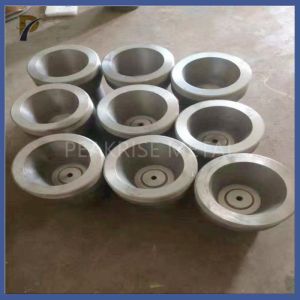
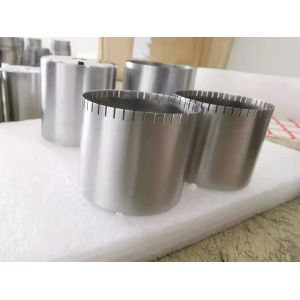
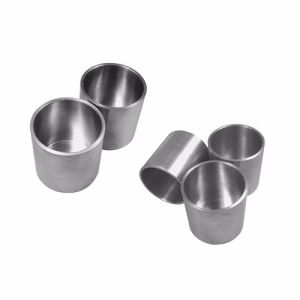
... are the key components of single crystal growth furnace, which have the characteristics of high temperature resistance, low pollution, high temperature resistance creep resistance and so on, ......
...Resistance For Quartz Glass 1. Product Details: Tungsten and molybdenum crucible, tungsten and molybdenum reflective thermal insulation screen, and tungsten heating element are the key components of single c...
... like aerospace, chemical processing, and oil and gas. Made from a nickel-chromium-molybdenum alloy, Inconel 625 offers exceptional resistance to oxidation, corrosion, and extreme temperatures, making it ide...
...-carbon variant 317L, this blind flange offers excellent corrosion resistance, particularly in hostile environments due to the presence of chromium, nickel, and molybdenum in...
... for use in severe corrosion environments due to the materials immunity from boundary carbide precipitation (sensitisation). The material is widely used in heavy gauge welded components and weld annealing is...
... gives these components universal corrosion resistance unparalleled by any other alloy. The use of ASTM B366 UNS N10276 elbow is noted in several industries because the alloy has outstanding resistance to a ...
... C276. Being a high performance alloy, the nickel-chromium-molybdenum chemistry of the Hastelloy C276 Pipe Fittings gives these components universal corrosion resistance unparalleled by any other alloy. The ...
... components for use in pressure systems. F310 flanges have low magnetic permeability due to their chemical composition. This makes A182 F310 material the first choice for cryogenic applications. Besides,F310...
... based alloy which has high strength properties. The main components of the WPHY60 material are nickel, chromium, molybdenum, manganese and copper. Besides these elements, this carbon based alloy contains tr...
... stability. HastelloyB-3 Pipe Fittings, which have good resistance to pit and stress corrosion cracking. Stub Ends are mechanical joints that consist of two components.The Stub End is essentially a short len...
... B3 Lap Joint Stub End is a specialized component made from Hastelloy B3, a high-performance nickel-molybdenum alloy known for its exceptional resistance to hydrochloric acid at all concentrations and temper...
...component used in piping systems for redirecting flow while maintaining pressure and preventing turbulence. Here are some key features of this specific fitting: Material Composition: Made from UNS S32750, it...
... component designed for high-efficiency heat transfer in demanding industrial applications. Below is a detailed breakdown of its features and characteristics: Material Specification: Base Tube: Manufactured ...
..., and use cases: 1. Base Tube Material: ASTM A213 T5 Alloy Composition: Chromium-molybdenum (5Cr-0.5Mo) steel, compliant with ASTM A213 T5 standards. Key Properties: High-Temperature Strength: Retains mechan...
.... It is made of nickel-molybdenum-chromium as the core component, has excellent resistance to hydrochloric acid and chloride stress corrosion and high temperature stability (applicable temperature -196°C to ...
...molybdenum high-temperature alloy with excellent corrosion/oxidation resistance and high strength. It is manufactured into round bars by forging or hot working processes. It has excellent high temperature re...
...-and-tube heat exchangers designed for extreme high-temperature, high-pressure, and hydrogen-corrosive environments. Made from chromium-molybdenum alloy steel forgings (1.0-1.5% Cr, 0.44-0.65% Mo), heat-trea...
...performance component designed for Heat Recovery Steam Generator (HRSG) systems in power plants. The P22 grade, containing chromium and molybdenum, provides excellent creep resistance, high-temperature stren...
... flanges, forged fittings, valves, and components for high-temperature service. F11 is a chromium-molybdenum alloy steel. CL2 stands for Class 2, a key classification for F11 material. This designation indic...
..., a quartz protective layer is formed on the surface of the silicon molybdenum rod to prevent further oxidation. When the temperature of the component exceeds 1700 ℃, the quartz protective layer melts, and t...