| Sign In | Join Free | My burrillandco.com |
|
.... It offers superior corrosion resistance in a wide range of aggressive chemicals. The chemical composition of Hastelloy B2 typically includes nickel, molybdenum, iron, chromium, and other elements to enhanc...
... is about 61.5%, the chromium content is about 14.5% to 16.5%, the molybdenum content is about 15% to 17%, and the iron content is about 5%. This alloy has excellent corrosion resistance and high-temperature...
...Element T1 T1a T1b Carbon 0.10-0.20 0.15-0.25 0.14max Manganese 0.30-0.80 0.30-0.80 0.30-0.80 Phosphorus 0.025 0.025 0.025 Sulfur max 0.025 0.025 0.025 Silicon 0.10-0.50 0.10-0.50 0.10-0.50 Molybdenum 0.44-0...
...elements in standard test mode can be extended if there is such a need.HXRF-120can analyze Ti, V, Cr, Mn, Fe, Co, Ni, Cu, Zn, Se, Zr, Nb, Mo, Rh, Pd, Ag, Cd, Sn, Sb, Hf,Ta, Re, Pb, and Bi,total25 elements. A...
...1065 Steels containing carbon as the major alloying element are called carbon steels. They may also contain up to 1.2% manganese and 0.4% silicon. Residual elements such as copper, molybdenum, aluminium, chr...
... such as copper, molybdenum, aluminium, chromium and nickel are also present in these steels. Dimensions and tolerances Thickness: 0.1 to 5 mm; Tolerances: +/- 0.008 to 0.11 mm Width: 10 to ......
... fabrications. It is a good material choice as it does not rust or stain due to the interaction of alloying elements, such as molybdenum, nickel, and chromium, with the environment; without these alloying el...
...steel, corton steel only phosphorus, copper, chromium, nickel, molybdenum, chromium, vanadium, titanium and other trace alloying elements, the total alloying elements account for only a few percent, while st...
... fabrications. It is a good material choice as it does not rust or stain due to the interaction of alloying elements, such as molybdenum, nickel, and chromium, with the environment; without these alloying el...
... Alloy steel: Alloy steel is a steel material whose properties are improved by adding alloy elements. Common alloying elements include chromium, nickel, molybdenum, etc. Alloy steel has excellent strength, h...
... and resistance to corrosion and high temperatures. Composition: the main alloying elements are nickel, chromium, and iron. Other elements like molybdenum, niobium, titanium, and aluminum may also be added t...
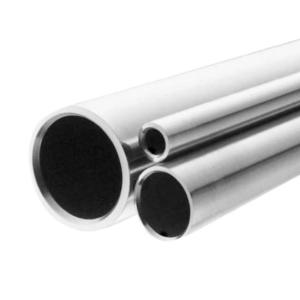
... under extreme environments. Nickel alloy pipe is mainly composed of nickel (Ni), and usually contains chromium (Cr), iron (Fe), molybdenum (Mo), copper (Cu), titanium (Ti) and other elements. The addition o...
... properties can be further enhanced by adding other elements, such as nickel, molybdenum, titanium, niobium, manganese, etc. Grade C Si Mn P S Cr Ni Mo N Cu 201 ≤0.15 ≤0.75 5.5~7.5 ≤0.060 ≤0.03 ......
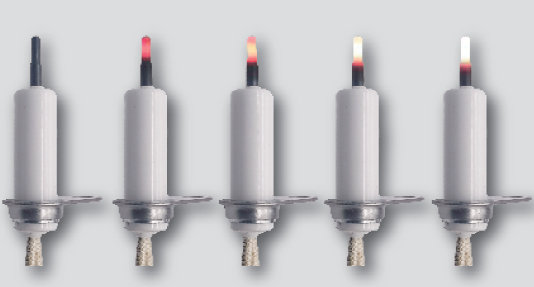
...heat conduction of the heating element for ignition. The heating element of the product is made of a silicon nitride-molybdenum disilicide composite material or silicon nitride with embedded heating wire (or...
..., which is an alloy of iron and other elements such as chromium, nickel, and molybdenum. The addition of these elements gives stainless steel coil its corrosion-resistant properties. Stainless steel coil is ...
... active substances such as effective trace elements and plant growth factors extracted from deep-sea plants. In addition, it also contains calcium, magnesium, sulfur, iron, zinc, and copper. Boron, manganese...
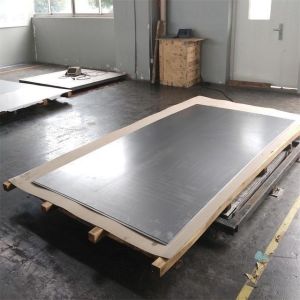
Application 30CrMo alloy steel plates enjoy high strength and toughness, it has good high temperature strength below 500 C, good machinability, moderate cold bending performance, high hardenability and good wel...
Description GB/T 3077 30CrMo alloy steel plate Chemical Composition: 30CrMo Chemical Composition Grade The Element Max (%) C Si Mn P S 30CrMo 0.26~0.34 0.17~0.37 0.40~0.70 0.035 0.035 GB/T 3077 30CrMo alloy ste...
... steel with excellent corrosion resistance due to the addition of molybdenum (Mo) element. Compared with other stainless steel materials, 316L stainless steel exhibits extremely high corrosion resistance in ...
..., chemical ,petrochemical industry, aerospace engineering. Advanced nickel-based high strength alloys traditionally have nickel and chromium as their foundation, with elements such as molybdenum, tungsten an...