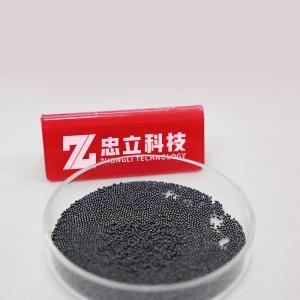
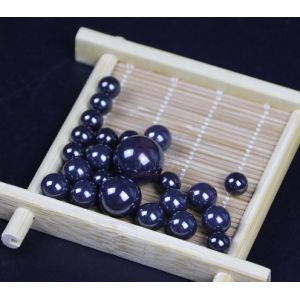
Product Description
In the realm of medical implants, the quest for materials that
offer durability, biocompatibility, and wear resistance is ongoing.
Silicon nitride (Si3N4) balls have emerged as a promising solution,
particularly in applications such as joint replacements and dental
implants.
Silicon nitride is a ceramic material known for its exceptional
mechanical properties, including high fracture toughness, low
density, and excellent thermal stability. These attributes make it
ideal for demanding applications across various industries,
including aerospace, military, and notably, the medical sector.
- High Wear Resistance: Si3N4 exhibits a low wear rate, making it suitable for
applications where durability is critical.
- Biocompatibility: Studies show that Si3N4 is well-tolerated by the human body, with
minimal immune response and excellent integration with biological
tissues.
- Thermal Stability: It retains strength and hardness at high temperatures, reducing
the risk of degradation in demanding environments.
The use of Si3N4 balls in medical implants, particularly in joint
replacements, has gained attention due to their superior wear
resistance and biocompatibility. Traditional materials like
ultra-high molecular weight polyethylene (UHMWPE) and
cobalt-chromium alloys have limitations, including the release of
wear particles that can lead to osteolysis and implant loosening.
Si3N4 offers a viable alternative.
- Reduced Wear Particles: Si3N4 generates fewer wear particles compared to traditional
materials, minimizing the risk of osteolysis.
- Biodegradability: The wear particles of Si3N4 can dissolve in bodily fluids,
potentially reducing the need for revision surgeries.
- Improved Longevity: The material's durability can extend the lifespan of implants,
offering a longer-term solution for patients.
A study published in the Journal of the Mechanical Behavior of Biomedical Materials highlights the potential of Si3N4 in dental implants. Using
digital light processing (DLP) technology, researchers successfully
fabricated Si3N4 dental implants that demonstrated excellent
mechanical properties and biocompatibility. The study underscores
the versatility of Si3N4 in various medical applications beyond
joint replacements.
- Mechanical Strength: The Si3N4 implants exhibited a flexural strength of 770 MPa and a
fracture toughness of 13.3 MPa·m1/2.
- Biocompatibility Tests: In vitro experiments confirmed the material's compatibility with
human tissues, showing no signs of toxicity or adverse reactions.
While Si3N4's primary focus is on medical applications, its
properties make it suitable for other industries as well. In the
aerospace and defense sectors, Si3N4 balls are used in
high-temperature and high-impact environments due to their
lightweight and high strength. They are also employed in hybrid and
full ceramic bearings for electric motors, offering reduced
friction and extended service life.
- Aerospace: Used in aircraft components for their heat resistance and
durability.
- Automotive: Ideal for engine parts and electric motor bearings, contributing
to improved efficiency and longevity.
- Industrial Tools: Utilized in metalworking tools for their wear resistance and
toughness.
| Property | Silicon Nitride (Si3N4) | Steel (440C) | Zirconia (ZrO2) | Alumina (Al2O3) |
|---|
| Density (g/cm³) | 3.2 | 7.8 | 6.0 | 3.9 |
| Hardness (HV) | 1,400–1,600 | 700–900 | 1,200–1,300 | 1,500–1,800 |
| Fracture Toughness (MPa·m½) | 6–7 | 15–20 | 7–10 | 3–4 |
| Compressive Strength (GPa) | 2.5–3.5 | 2.0–2.5 | 2.0–2.3 | 2.0–3.0 |


●Description:
Silicon Nitride Ceramic Ball is the most ideal bearing ball for
bearing applications, due to the excellent properties of silicon
nitride ceramics, it has many irreplaceable advantages comparing to
traditional steel materials, such as: high mechanical strength, low
wear loss, good self-lubrication, low density, high corrosion
resistance, good electrical insulation etc.
Therefore, Silicon Nitride Balls are mostly used for some harsh
working conditions: high speed/super speed bearings, high precision
bearings, bearings in vacuum, high/low temperature bearings.
Moreover, Silicon Nitride Ceramic Balls can also used as valve ball
or measurement balls in chemical pumps/high temperature
pumps/metdering pumps.
●Physical Properties:
Chemical Composition: | Si3N4≥95% |
Bulk Density: | 3.2±0.05g/cm3 |
Elastic Modulus: | 350GPa |
Hardness Vickers: | 1870HV |
Bending Strength: | 780MPa |
Fracture Toughness: | 7.2MPa·m1/2 |
Thermal Expansion Coefficient: | 3.2 10-6/K |
Thermal Conductivity: | 25W/(m·K) |
● Ball Sizes/Grade :
Size (mm) | Φ0.8-180 |
Grade | Vdws | SPH | Vdwl | Ra |
G3 | 0.05-0.08 | ≤0.08 | <0.13 | 0.01 |
G5 | 0.08-0.13 | ≤0.13 | <0.25 | 0.014 |
G10 | 0.15-0.25 | ≤0.25 | <0.5 | 0.02 |
G16 | 0.2-0.4 | ≤0.4 | <0.8 | <0.025 |
G20 | 0.3-0.5 | ≤0.5 | <1 | <0.032 |
G100 | 0.4-0.7 | 0.4-0.7 | <1.4 | <0.0105 |
Factory equipment

Exhibition & Partner

Case
Ship to South Korea


Ship to Spain


FAQ
1. What sizes and tolerances are available?
Diameter range: 0.5mm to 50mm (custom sizes possible).
Sphericity: As low as 0.1µm (Grade 5 for ultra-precision bearings).
Surface finish: Ra < 0.02µm (mirror polish for low friction).
2. Are silicon nitride balls FDA-approved for medical use?
Yes! Si3N4 is biocompatible (ISO 6474-1) and used in spinal implants, dental devices, and joint
replacements due to its antibacterial properties.
3. How do I choose the right Si3N4 balls for my application?
Consider:
Load & speed requirements (dynamic/static stress).
Temperature range (Si3N4 excels in high heat).
Chemical exposure (resistant to most acids/alkalis).
Electrical insulation needs (non-conductive).