Product Description
In the realm of aerospace engineering, where precision and
reliability are paramount, the choice of materials can make all the
difference. Silicon nitride (Si3N4) balls have emerged as a
groundbreaking solution for satellites and extreme environments,
offering unparalleled performance where traditional materials fall
short.
Silicon nitride is a ceramic material renowned for its exceptional
strength, thermal resistance, and chemical inertness. Its unique
composition makes it ideal for applications that demand resilience
under extreme conditions. The material is available in several
phases, with the β-phase being the most commonly used due to its
superior thermal stability and mechanical properties.
Compressive Strength: Silicon nitride boasts a compressive strength of up to 4000 MPa,
significantly surpassing traditional materials like steel, which
generally offer around 2500-3000 MPa. This makes Si3N4 balls
suitable for handling high pressures in aerospace systems.
Lightweight Advantage: Si3N4 is 30-40% lighter than steel, reducing the weight of
critical components and enhancing fuel efficiency and payload
capacity—key considerations in aerospace engineering.
Thermal Resistance: Silicon nitride maintains its strength even at temperatures
exceeding 1000°C, making it ideal for environments such as jet
engines and space missions, where extreme heat is commonplace.
Wear and Corrosion Resistance: The material resists wear and corrosion, functioning reliably in
vacuum environments, high humidity, or without lubrication. This
reduces maintenance needs and extends the lifespan of components.
Silicon nitride balls are transforming aerospace applications,
proving their worth in scenarios where traditional materials
falter. Here are some key areas where Si3N4 balls are making an
impact:
In satellite technology, precision is crucial. Si3N4 balls are used
in reaction wheels and gyroscopes, essential for accurate
positioning in space. Their resistance to wear and corrosion
ensures long-term reliability, minimizing the risk of failure
during extended missions.
A satellite manufacturer faced frequent bearing failures due to
wear and degradation in vacuum conditions. By switching to silicon
nitride bearings, the company achieved zero failures over five
years, significantly extending satellite operational times.
Jet engines demand materials that can withstand extreme heat and
stress. Si3N4 bearings excel in these conditions, maintaining their
strength at high temperatures and operating reliably at high
speeds. This makes them a preferred choice for high-performance
rotors and turbines.
Beyond aerospace, the benefits of silicon nitride balls are being
realized in industries like automotive and renewable energy.
Electric vehicles use them to improve efficiency and reduce battery
strain, while wind turbines rely on their durability in high-stress
components, increasing energy output.
Silicon nitride’s lightweight properties contribute to lower fuel
consumption and emissions in aerospace and automotive applications.
Advances in manufacturing are also driving down production costs,
making these bearings accessible to more industries.
| Property | Silicon Nitride (Si3N4) | Steel (440C) | Zirconia (ZrO2) | Alumina (Al2O3) |
|---|
| Density (g/cm³) | 3.2 | 7.8 | 6.0 | 3.9 |
| Hardness (HV) | 1,400–1,600 | 700–900 | 1,200–1,300 | 1,500–1,800 |
| Fracture Toughness (MPa·m½) | 6–7 | 15–20 | 7–10 | 3–4 |
| Compressive Strength (GPa) | 2.5–3.5 | 2.0–2.5 | 2.0–2.3 | 2.0–3.0 |


●Description:
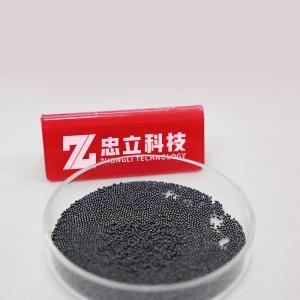
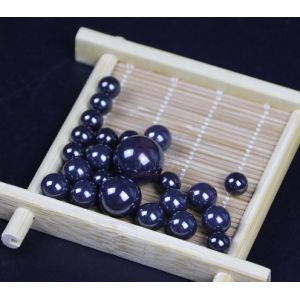
Silicon Nitride Ceramic Ball is the most ideal bearing ball for
bearing applications, due to the excellent properties of silicon
nitride ceramics, it has many irreplaceable advantages comparing to
traditional steel materials, such as: high mechanical strength, low
wear loss, good self-lubrication, low density, high corrosion
resistance, good electrical insulation etc.
Therefore, Silicon Nitride Balls are mostly used for some harsh
working conditions: high speed/super speed bearings, high precision
bearings, bearings in vacuum, high/low temperature bearings.
Moreover, Silicon Nitride Ceramic Balls can also used as valve ball
or measurement balls in chemical pumps/high temperature
pumps/metdering pumps.
●Physical Properties:
Chemical Composition: | Si3N4≥95% |
Bulk Density: | 3.2±0.05g/cm3 |
Elastic Modulus: | 350GPa |
Hardness Vickers: | 1870HV |
Bending Strength: | 780MPa |
Fracture Toughness: | 7.2MPa·m1/2 |
Thermal Expansion Coefficient: | 3.2 10-6/K |
Thermal Conductivity: | 25W/(m·K) |
● Ball Sizes/Grade :
Size (mm) | Φ0.8-180 |
Grade | Vdws | SPH | Vdwl | Ra |
G3 | 0.05-0.08 | ≤0.08 | <0.13 | 0.01 |
G5 | 0.08-0.13 | ≤0.13 | <0.25 | 0.014 |
G10 | 0.15-0.25 | ≤0.25 | <0.5 | 0.02 |
G16 | 0.2-0.4 | ≤0.4 | <0.8 | <0.025 |
G20 | 0.3-0.5 | ≤0.5 | <1 | <0.032 |
G100 | 0.4-0.7 | 0.4-0.7 | <1.4 | <0.0105 |
Factory equipment

Exhibition & Partner

Case
Ship to South Korea


Ship to Spain


FAQ
1. What sizes and tolerances are available?
Diameter range: 0.5mm to 50mm (custom sizes possible).
Sphericity: As low as 0.1µm (Grade 5 for ultra-precision bearings).
Surface finish: Ra < 0.02µm (mirror polish for low friction).
2. Are silicon nitride balls FDA-approved for medical use?
Yes! Si3N4 is biocompatible (ISO 6474-1) and used in spinal implants, dental devices, and joint
replacements due to its antibacterial properties.
3. How do I choose the right Si3N4 balls for my application?
Consider:
Load & speed requirements (dynamic/static stress).
Temperature range (Si3N4 excels in high heat).
Chemical exposure (resistant to most acids/alkalis).
Electrical insulation needs (non-conductive).